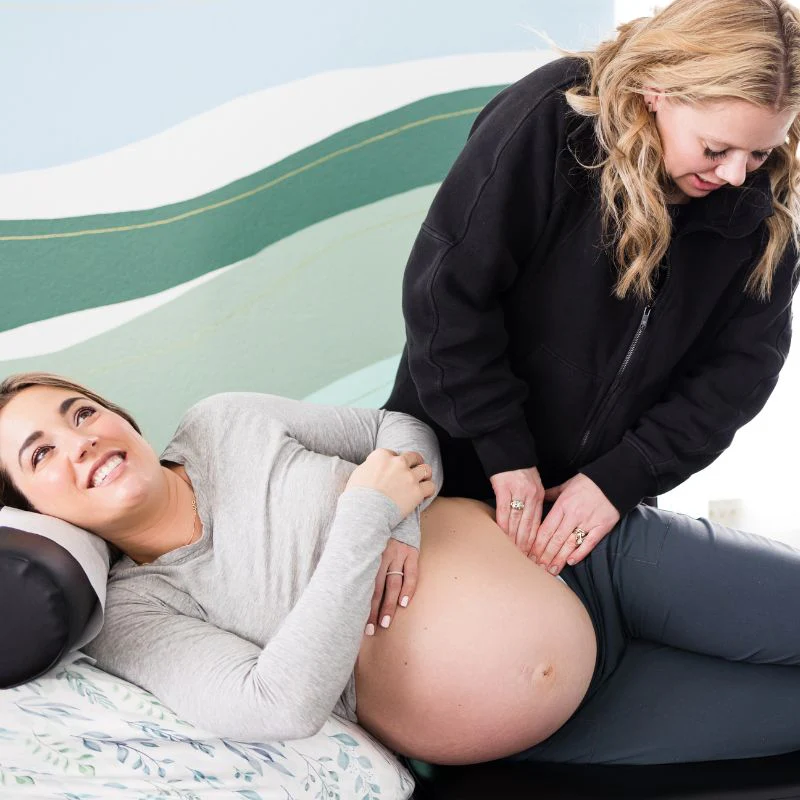
The journey of labor is often described as a marathon rather than a sprint. For many, the early stages are manageable—a gentle rhythmic pull that allows for conversation, movement, and perhaps even some rest. But as the process unfolds, contractions inevitably intensify. They become longer, stronger, and closer together. In these moments, it is common to feel a sense of overwhelm, as if the physical sensations are beginning to outpace your internal resources.
Staying centered during these peak moments isn’t about stopping the sensation—it’s about changing your relationship to it. It is about moving from a place of resistance to a place of surrender, anchoring yourself in your body when the world feels like it is spinning. If you are preparing for birth in Hyderabad or the surrounding regions, building these mental and physical anchors is a vital part of your prenatal toolkit.
Here is how to remain grounded and centered when the intensity of labor rises.
The Physiology of Surrender
When contractions intensify, the body’s “fight or flight” response can be triggered. If you perceive the pain as a threat, your body releases adrenaline, which can actually inhibit the production of oxytocin—the hormone responsible for labor progress. This is often where the cycle of tension creates more pain.
To stay centered, you must actively counteract this response. Think of your uterus as a powerful muscle doing the work it was designed to do. When you resist that work by tensing your shoulders, clenching your jaw, or holding your breath, you create an obstacle for the process. Instead, focus on the gentle birth principles that prioritize openness and flow. By consciously softening your body, you send a signal to your nervous system that you are safe, allowing your body to work in harmony with the intensity rather than against it.
Create Your Sensory Anchor
When you are deep in the “labor land” of active labor, your logical, linear brain often takes a back seat. To stay centered, you need sensory inputs that bring you back to the present moment without requiring complex thought.
- The Power of Breath: Your breath is the ultimate anchor. During intense contractions, shallow breathing is a natural reflex to the physical demand. Counter this by focusing on long, slow, deep exhalations. Visualize the breath traveling down to the source of the sensation, “opening” the space.
- Physical Touch: If you have a birth partner, utilize them as a grounding force. Ask them for firm, steady pressure on your lower back, or simply hold their hand. Physical contact can ground you, reminding you that you are not alone. You can find more tips on building this dynamic in our guide on partner support.
- Visual Focus: Pick an object in the room—a photograph, a candle, or even a spot on the wall—and make it your focal point. Soften your gaze. By narrowing your visual field, you reduce the sensory input from the room, making it easier to go inward.
Utilize Mind-Body Techniques
Centering is a mental discipline as much as a physical one. If you have been practicing mind-body techniques throughout your pregnancy, now is the time to lean into them.
One effective strategy is the use of affirmative visualizations. When a contraction begins, imagine it as a wave. A wave has a peak and then it inevitably recedes. Tell yourself, “This is just a wave, and it will crest and then fall.” By labeling the contraction as a temporary event rather than an endless state, you reduce the psychological pressure of the intensity.
Additionally, vocalization can be a powerful grounding tool. Low, guttural sounds—the “open throat” technique—help to keep the jaw loose. Because the jaw and the pelvic floor are neurologically linked, keeping your mouth soft and open can encourage your cervix to follow suit.
Moving Through the Intensity
Sometimes, staying centered means movement. If you find yourself freezing up, change your environment or your position. Transitioning from a bed to a birth ball, or from sitting to leaning, can shift your perspective.
For those who are currently working on their pregnancy preparation, consider spending time in different positions now so that when labor hits, moving comes as a second nature. Your body knows how to birth; sometimes, the best way to stay centered is to simply listen to the prompts your body gives you—whether that is to sway, to rock, or to rest.
The Role of External Knowledge and Support
Even with the best preparation, the intensity of labor can feel daunting. This is why it is so important to have a roadmap. According to resources like Evidence Based Birth, understanding the physiology of labor and the efficacy of various comfort measures can significantly reduce anxiety. When you know why your body is doing what it is doing, fear is replaced by a sense of purpose.
If you feel you need more tools or want to discuss specific techniques for managing intensity, do not hesitate to look through our labor and birth techniques library or reach out for personalized support. Whether you are seeking classes or just have a few lingering questions, we are here to support your unique journey.
Trusting Your Process
Remember: intensity does not equal a problem. Intensity is the mechanism of transformation. When you feel the peak of a contraction, you are moving closer to meeting your baby.
Stay anchored in your breath. Rely on your support team. Keep your jaw soft. By maintaining these small, intentional practices, you create a sanctuary of calm within the intensity. You are stronger than you realize, and your body is perfectly capable of navigating this transition.
If you are looking for more resources or need guidance as you approach your due date, please explore our blog for more insights, or contact us today. You don’t have to walk this path alone.