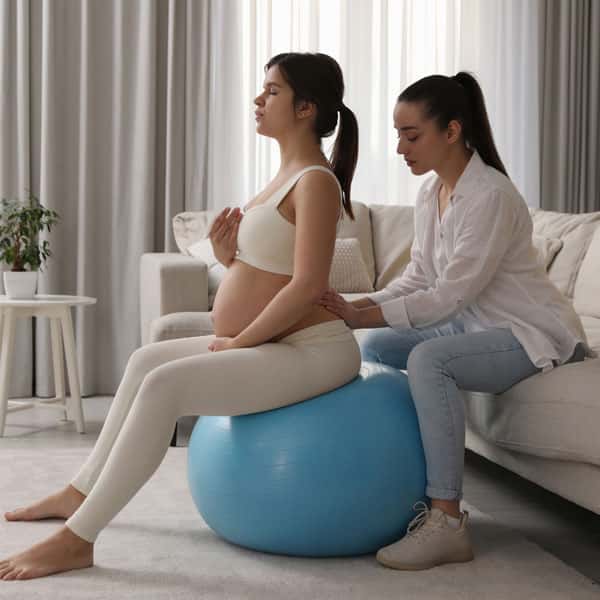
Early labor is often characterized by excitement, anticipation, and—for many—a degree of uncertainty. It is the time when the body is beginning its “warm-up” phase, and the intensity is usually manageable. The goal during this period is not necessarily to “stop” the sensations, but to stay comfortable, conserve energy, and keep your nervous system in a state of calm.
When you remain relaxed, your body produces the oxytocin necessary for labor to progress efficiently. Here are several simple, effective comfort techniques to utilize in these early stages.
1. Rhythmic Movement and Gravity
Movement is one of the most effective ways to manage labor sensations. Gravity helps encourage the baby to descend into the pelvis, which can actually help contractions become more regular and effective.
- Swaying: Find a doorframe or a supportive partner and gently sway your hips. This rhythmic motion is inherently grounding.
- The Birth Ball: Sitting on a yoga or birth ball and doing gentle hip circles helps open the pelvis and provides a soft, supportive surface for your changing body.
- Pelvic Tilts: Simple cat-cow stretches on all fours can relieve lower back pressure, which is a common complaint in early labor.
2. The Power of Warmth
Heat is a natural muscle relaxant. It increases blood flow and helps soothe the cramping sensation often associated with early labor contractions.
- Warm Compresses: If you are feeling lower back pain, a warm (not hot) water bottle or a heated rice sock pressed against the area can offer significant relief.
- Warm Showers: The sensation of water running over your back or belly can be incredibly soothing. It serves as a “sensory reset,” helping you focus on the water rather than the intensity of the contraction.
3. Intentional Breathwork
Breath is the bridge between your mind and your body. When we are uncomfortable, our natural instinct is often to hold our breath or take shallow breaths, which can increase tension.
- Slow Exhales: Focus on making your exhale longer than your inhale. This triggers the parasympathetic nervous system, signaling to your body that you are safe.
- “Singing” or Humming: Making low, guttural sounds (like a deep “oooh” or “aaah”) helps keep your jaw relaxed. In many labor and birth techniques, it is taught that a loose jaw corresponds to a loose pelvic floor.
4. Sensory Regulation
In early labor, your senses may become heightened. Regulating your environment can make a world of difference in how you perceive discomfort.
- Dim the Lights: Your body releases melatonin in the dark, which is a sister hormone to oxytocin. Creating a “nest” with low lighting and quiet can help you stay in your “labor bubble.”
- Curated Soundscapes: Whether it is a calming playlist, a podcast, or complete silence, choose what helps you drop into a meditative state.
- Focus Objects: Having a familiar object—a comforting blanket, a photo, or a crystal—can serve as a visual anchor during contractions.
5. Leveraging Partner Support
Early labor is the perfect time to lean on your partner. Having someone there to provide physical comfort or simply to witness your progress changes the entire dynamic of the experience.
- Counter-pressure: A partner can provide firm, steady pressure on your lower back during a contraction to counteract the ache.
- Words of Affirmation: Sometimes, hearing a grounded, calm voice reminding you that your body is doing exactly what it needs to do is the most effective comfort measure of all. Explore our tips on partner support for more specific ways your birth companion can assist.
Trusting the Process
Remember that early labor can last for hours or even days. The most important “technique” is to avoid watching the clock. Focus on nourishment, hydration, and rest when possible.
If you find yourself feeling anxious or if the sensations are moving in a way that feels confusing, remember that you don’t have to navigate this alone. Many people find that practicing mind-body practices well before their due date allows these comfort techniques to become second nature when labor actually begins.
For more information on how to prepare for the different phases of birth, you can browse our pregnancy preparation resources. If you have specific concerns about your progress, we are always here to help—feel free to contact us or visit our FAQ page for quick answers to common questions.
How are you planning to create your “labor sanctuary” at home? Focusing on these small adjustments now can make a significant difference when the time finally comes.