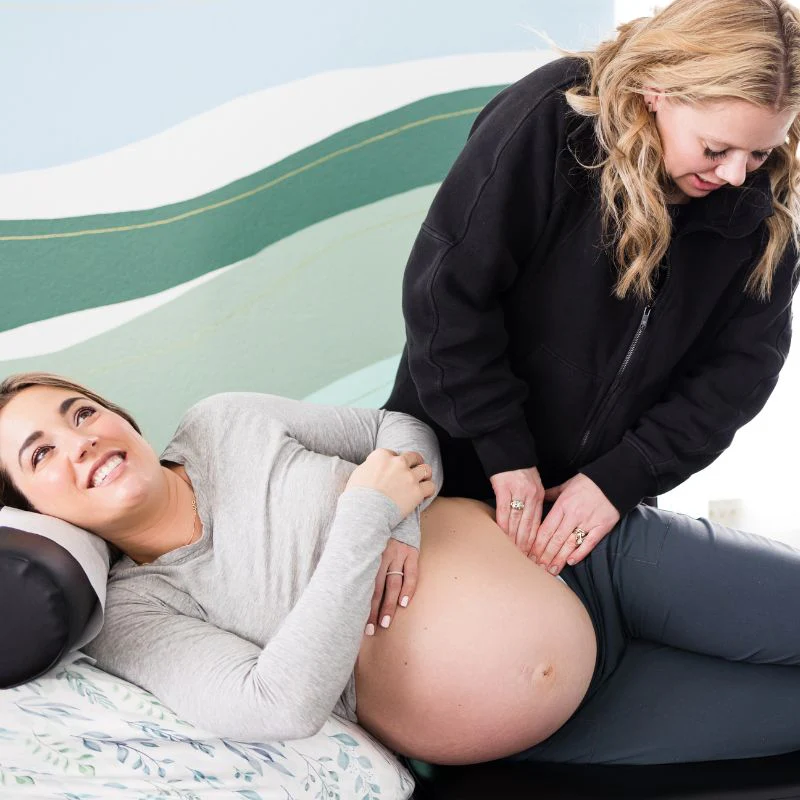
The atmosphere of a birth space is far more than just a matter of aesthetic preference. For the birthing person, the environment acts as a constant stream of data that the brain uses to determine if the body is safe enough to let go. In the world of birth, this is often described as the “birthing bubble.” When that bubble is curated with intention—using light and sound as foundational elements—the hormonal process of labor can unfold with remarkable ease.
At A Gentle Birthing, we emphasize that the environment is one of the most underutilized tools in pregnancy preparation. By understanding how lighting and sound influence the nervous system, you can actively shape your experience, moving away from a high-stress “fight or flight” state and toward the “rest and digest” state that promotes efficient labor.
The Biological Impact of Lighting
The human brain is evolutionarily wired to respond to light. Specifically, bright, harsh, or flickering light—such as the standard fluorescent lighting found in many clinical settings—is linked to alertness. It signals to our primitive brain that it is time to be awake, scanning for danger, and active.
During labor, this is the exact opposite of what the body needs. Birth is a deeply primal, parasympathetic event. It requires the brain to “switch off” the analytical, neocortex-heavy functions and switch on the more intuitive, hormone-driven systems.
Why “Low” is Better
When you dim the lights, you are signaling to your brain that it is time to sleep or move inward. This shift encourages the production of melatonin, which has been shown to work synergistically with oxytocin. By lowering the lights, you aren’t just making the room “cozy”; you are biologically encouraging the transition into the deeper states of labor.
- Practical Tip: If you are planning a hospital birth, consider bringing dimmable battery-operated lamps, string lights, or even a silk scarf to drape over a lamp (ensuring it is safely away from heat). Even in a clinical space, creating a “low-light pocket” can significantly change your perception of safety.
The Power of Soundscapes
Just as light impacts the visual cortex, sound travels directly to the brain’s emotional center—the limbic system. High-pitched noises, shouting, the beeping of monitors, or even the hurried energy of multiple conversations can cause an immediate spike in adrenaline. In birth, adrenaline is the antagonist to oxytocin.
Curating Your Audio Environment
Conversely, rhythmic, consistent, or soothing sounds can anchor the laboring person. Many of the families we support rely on sound as a key component of their labor birth techniques.
- Ambient Music: Soft, wordless music (like ambient soundscapes or classical pieces) can provide a consistent background that masks the unpredictable noises of a hospital.
- The Power of Rhythm: Some laboring people find that listening to music with a steady, drum-like beat helps them find a rhythm for their breathing or movement.
- Silence as a Sound: Do not underestimate the power of silence. Sometimes, the most supportive sound is the absence of external noise, allowing the birthing person to listen to their own breath and their body’s cues.
The Partner’s Role as “Environment Guardian”
One of the most common roles we discuss during partners support sessions is that of the “environment guardian.” The birthing person is often in a “labor land”—a trance-like state where they cannot—and should not—be bothered by logistical decisions.
It is up to the partner to manage the sensory input. This might mean:
- Politely asking staff to dim the lights.
- Managing the volume of the room, including speaking in lower, slower tones.
- Being the person who silences buzzing electronics or phone notifications.
- Creating a “cushion” of sound or light around the bed.
When the partner takes ownership of these details, it allows the laboring person to stop “thinking” and simply “be.” This kind of protection is a foundational aspect of our gentle birth principles.
Aligning with Your Needs
Every individual has a different sensory threshold. Some may love a playlist full of energetic, uplifting songs, while others may find that any noise at all is too much. This is why we encourage families to explore their preferences long before the big day. Through our various mind-body practices, you can experiment with what helps you reach a state of deep relaxation, ensuring you have a clear plan for your environment.
If you are a local family and you are feeling unsure about how to talk to your healthcare providers about your environmental preferences, we invite you to browse our frequently asked questions. Often, hospital staff are more than happy to accommodate these requests when they are communicated kindly and clearly as part of your birth plan.
Strengthening Your Support System
Creating a calm environment is a team effort. Whether you are working with a doula, a midwife, or a supportive partner, make sure your team understands that light and sound management is a priority for you.
We are always here to help you navigate these choices. If you want to connect with our local community or discuss how to tailor your birth environment to your specific needs, please feel free to contact us. We pride ourselves on helping families create the kind of birth experience that feels supportive, intentional, and calm.
For those interested in the deeper research behind birth environments, the Evidence Based Birth® organization provides excellent resources on how environmental factors influence the labor process. Their insights confirm what we observe in our practice every day: when we honor the physiological need for low stimulation, we often see better outcomes for both parent and baby.
Final Thoughts: The Environment You Deserve
You are the author of your birth story, and you have the right to curate the space in which that story unfolds. Do not feel that you must conform to a cold, clinical, or overly bright environment just because it is the “standard.”
By being mindful of the light and sound you surround yourself with, you are doing the important work of protecting your nervous system. You are creating a sanctuary that honors the gravity and the beauty of birth. Trust your senses. If the lights are too bright, dim them. If the room feels too loud, bring in your own soundscape. When you honor your need for a calm, protected environment, you are giving yourself the greatest gift: the freedom to focus entirely on the work—and the joy—of bringing your baby into the world.