In the landscape of modern life, our nervous systems are constantly being tested. Between the demands of a busy career, the physiological adjustments of pregnancy, or the anticipation of labor, it is easy to find ourselves stuck in a state of high alert. This chronic activation, often manifesting as shallow breathing, tight muscles, or persistent anxiety, is the body’s way of saying it has reached its capacity.
Learning how to “reset” the nervous system is not about suppressing stress; it is about reclaiming your ability to return to a state of calm. For those navigating the transformative journey of birth, this skill is invaluable. At A Gentle Birthing, we believe that cultivating a resilient nervous system is one of the most effective forms of pregnancy preparation. By teaching your body how to shift from “fight or flight” to “rest and digest,” you are building a foundation of safety that will serve you throughout labor and beyond.
Understanding the “Reset”
The autonomic nervous system is divided into two primary branches: the sympathetic (the gas pedal) and the parasympathetic (the brake). Our goal isn’t to never press the gas—life requires energy—but to ensure we know exactly how to engage the brake.
When you are overstimulated or stressed, your body produces cortisol and adrenaline. While these are necessary in emergencies, they are counterproductive to the relaxation and oxytocin production required for a gentle birth. Resetting the nervous system is the process of manually engaging the parasympathetic nervous system, signaling to the brain that, right now, in this moment, you are safe.
Gentle Techniques for Immediate Relief
You do not need an hour of meditation to shift your state. Sometimes, a “reset” can take as little as sixty seconds.
1. The Vagus Nerve Stimulation
The vagus nerve is the longest cranial nerve in the body and acts as the primary controller of the parasympathetic nervous system. You can “hack” this nerve through specific, gentle movements.
- Humming or Singing: The vibration of your vocal cords in the throat can stimulate the vagus nerve. Try humming a low, steady tone for several breaths.
- Cold Exposure: Splashing cold water on your face or holding a cold compress to your neck can trigger the “mammalian dive reflex,” which naturally slows the heart rate and resets the nervous system.
2. Physiological Sighing
Research has shown that the fastest way to reduce physiological arousal is the “physiological sigh.” This involves two inhales followed by one long, extended exhale.
- Take a deep inhale through your nose, and then, before you exhale, take a second, shorter inhale to fully inflate the lungs.
- Follow this with a very long, slow, audible sigh through your mouth.
- Repeat this 2–3 times. This method helps to offload carbon dioxide and provides immediate feedback to the brain to slow down.
3. Progressive Muscle Relaxation
When we are tense, we often hold that tension in our shoulders, jaw, and pelvic floor. During your mind-body practices, try scanning these areas.
- Gently tense a muscle group as you inhale, and completely release it as you exhale.
- Notice the difference between the “held” state and the “released” state. This awareness helps you catch tension before it becomes chronic.
Integrating Resets into Your Birth Journey
If you are preparing for birth, these resets are more than just self-care—they are essential labor birth techniques. During the intensity of contractions, it is normal for the body to want to tense up. By practicing these resets in the weeks leading up to your due date, you are training your body to recognize the “release” pattern even when the environment is intense.
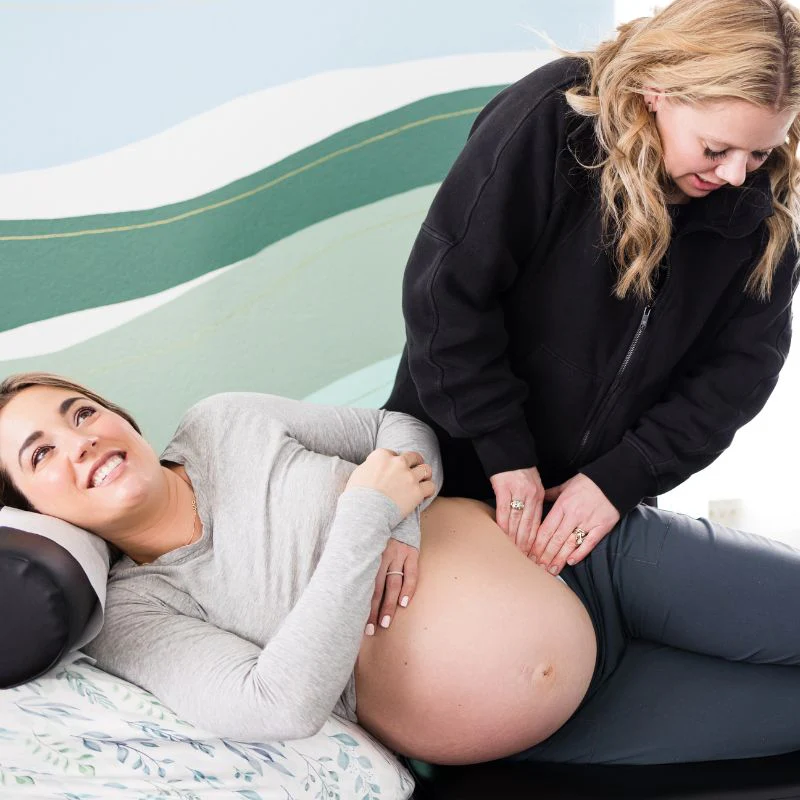
This is where your support team becomes crucial. We often teach partners how to recognize the signs of an overstimulated nervous system in their partner—such as rapid blinking, a clenched jaw, or breath-holding. Through dedicated partners support, they can gently remind you to “take a sigh” or suggest a change in position, helping you stay in your flow without having to think your way there.
Local Resources and Community Support
We understand that sometimes, the best way to reset is by stepping out of your routine and connecting with a community that understands your goals. If you are a local family looking for deeper support, whether through classes, workshops, or one-on-one sessions, we invite you to reach out.
Our mission is to help you align with your body’s natural wisdom, grounded in our gentle birth principles. If you have specific questions about how to incorporate these nervous system resets into your unique birth plan, or if you simply want to learn more about our philosophy, our frequently asked questions are a great place to start. You can also contact us directly to discuss how we can support your specific needs.
The Long-Term Benefit: Resilience
The beauty of these techniques is that they are not just for birth; they are for life. Motherhood, parenthood, and the general pace of modern existence all benefit from a person who knows how to regulate their nervous system. When you learn to reset, you are not avoiding the challenges of life; you are equipping yourself to move through them with grace.
For those interested in the science behind vagal tone and stress management, the Polyvagal Institute offers fascinating insights into how our nervous system shapes our social engagement and emotional regulation. Their work reinforces what many of us intuitively know: we function best when we feel safe.
Final Thoughts: Gentleness as a Practice
Remember that “resetting” is not a chore, and it shouldn’t feel like another item on your to-do list. Approach it with curiosity. If one technique doesn’t work, try another. Perhaps humming feels silly, but a long, slow sigh feels blissful. Maybe cold water is too much, but soft, rhythmic movement is exactly what you need.
There is no “right” way to calm your nervous system. There is only the way that works for you. By prioritizing these gentle resets, you are practicing a profound level of self-respect. You are telling your body that it deserves to be at peace, and in doing so, you are creating the best possible environment for your baby to grow and your family to thrive.
Take a moment right now. Drop your shoulders. Soften your jaw. Take a double inhale, and let out a long, slow sigh. You are safe. You are capable. You are ready.